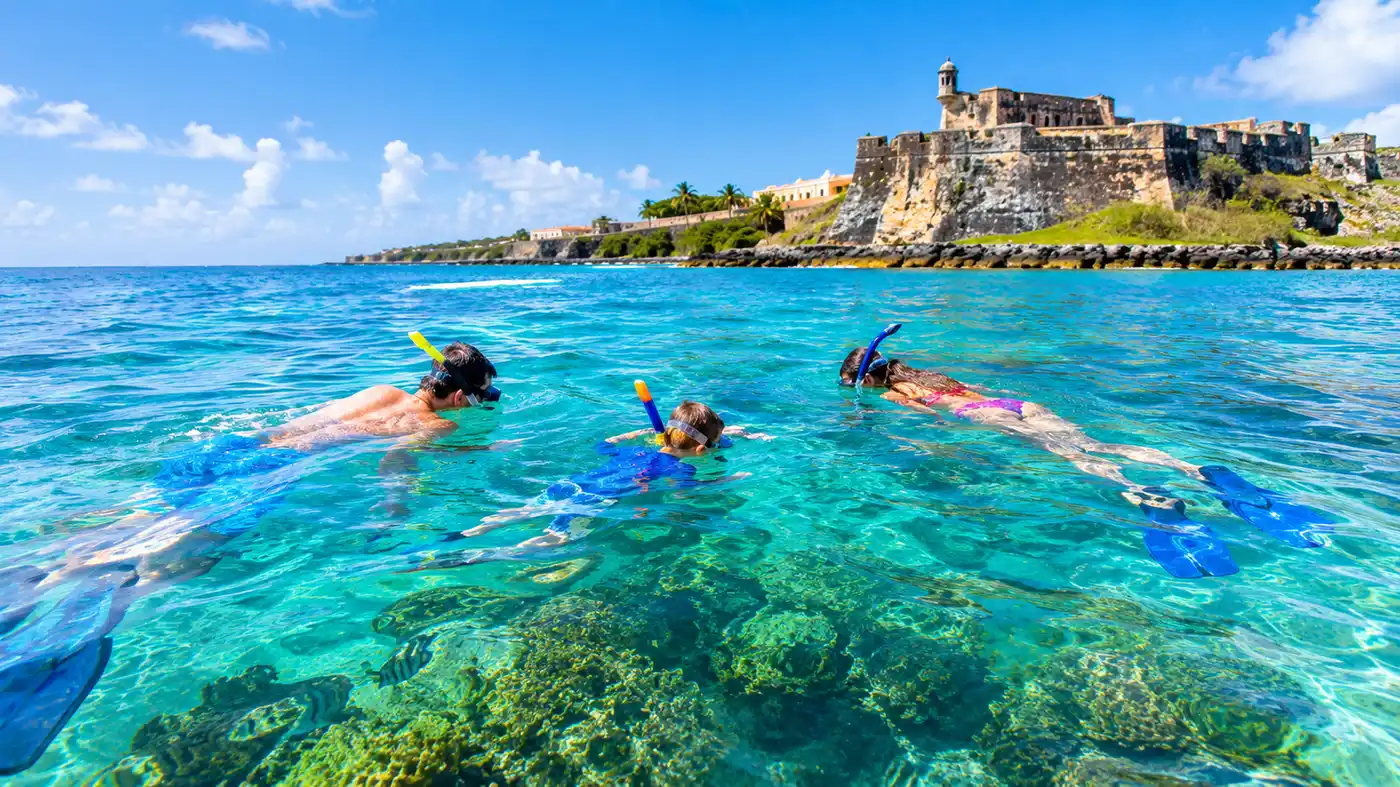
Safety First Best Area to Snorkel in San Juan for Families
Watching my seven-year-old niece try to breathe through a plastic snorkel tube while a knee-high wave knocked her mask sideways taught me a fast lesson about the north coast of Puerto Rico. The Atlantic Ocean does not care that you bought a cute pair of youth-sized fins. When you look into family snorkeling in san juan puerto rico, the photos make every strip of turquoise water look like a placid bathtub, but the reality can catch parents off guard. The northern coast faces open ocean swell. Rip currents are common, and choosing the wrong spot means you spend your morning wrestling panicked children instead of looking at fish.
I learned the hard way that picking where to take your crew is eighty percent of the battle. If the water is calm, kids build confidence in about ten minutes. If there is a strong surge, even strong swimmers get spooked. San Juan has several famous stretches of sand, but only two or three tiny pockets actually work well for small humans who need to touch bottom occasionally. Let us walk through where you should go, what places you must skip, and how to keep everyone safe without turning your vacation into a military exercise.
Book your snorkeling in puerto rico experience:
The Raw Reality of Ocean Conditions and General Safety
People ask me all the time: is Puerto Rico good for snorkeling? Yes, absolutely, but you have to understand the geography. San Juan sits right on the Atlantic side. The south coast of the island faces the Caribbean Sea, which is notoriously flatter and calmer. Up here in the capital, open beaches take direct ocean swell from winter storms hundreds of miles away. A beach can look peaceful from your hotel balcony on Ashford Avenue and be downright dangerous once you step waist-deep into the water.
Condado Beach is the prime example of this trap. Visitors see golden sand, drop their towels, and assume they can float around with a mask. Do not do this with children. The undertow at Condado Beach is severe enough that locals avoid swimming there entirely, which is why you will rarely see anyone in the water beyond their ankles. If you are curious about water dynamics on that stretch, our deep dive into Condado Beach snorkeling breaks down why that shoreline is better suited for sunbathing than underwater exploration.
You might also wonder: is Ocean Park San Juan safe for family swims? Ocean Park has a softer vibe and lots of kite surfers, but it remains an open-ocean beach. While the waves are great for body surfing on moderate days, the water visibility is usually murky from churned sand, and random drop-offs can easily surprise young kids. For true snorkeling where little eyes can actually see marine life through clear water, open ocean stretches are simply the wrong pick. You need natural breakwaters or enclosed lagoons.
Note: Never snorkel off the north-facing Atlantic beaches like Ocean Park or central Condado when yellow or red warning flags are flying. Rip currents here can pull even experienced adult swimmers outward in seconds.
Escambrón Marine Park: The Gold Standard for Kids
If you take nothing else away from this guide, remember this name: Balneario del Escambrón. It sits neatly between Miramar and Old San Juan, tucked away behind a sprawling public park with ancient sea walls in the distance. This is the undisputed capital of safe family snorkeling in Puerto Rico San Juan, and it is where local instructors bring their open-water students for their very first ocean dives.
What makes it special is a natural horseshoe of ancient coral and submerged rock that acts as a fortress against heavy Atlantic waves. Inside the protected cove, known locally as the Batería section, the surface stays calm. The water often looks like a swimming pool on windless mornings. The bottom slopes gradually from soft sand to scattered sea glass and rock beds, meaning small children can stand comfortably in waist-deep water while dipping their faces into the sea to spot blue tangs.
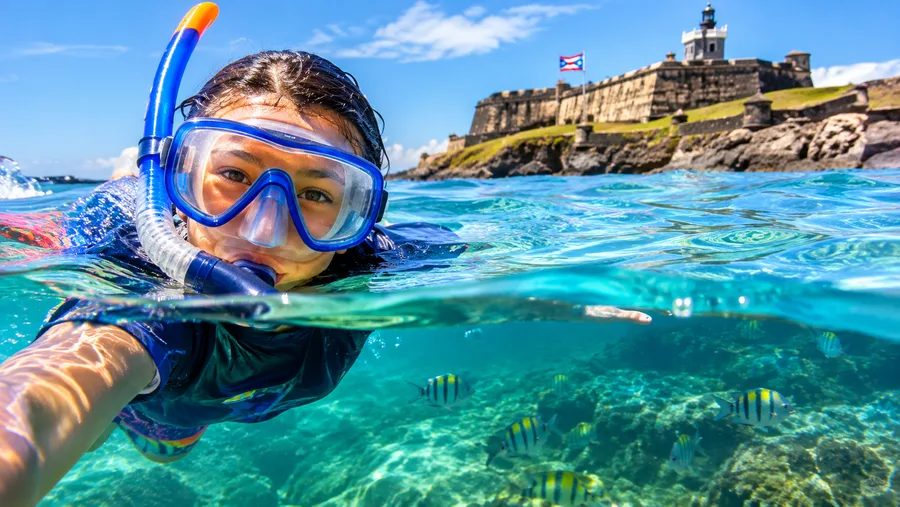
Over the years, divers placed concrete reef balls and submerged structures across the cove floor. Coral now blankets these formations, drawing yellowtail snappers, sergeant majors, squid, and puffers into water that rarely exceeds twelve feet in depth. If you want a full breakdown of the layout, check out our guide on Escambrón Marine Park. Best of all, green sea turtles feed on the seagrass meadows right around the boundary between the inner cove and the outer bay.
Pro tip: Arrive at Escambrón before 8:45 AM on weekdays to grab shade under the palm trees near the water and snorkel before the midday scuba classes stir up sediment.
My niece spotted her first green sea turtle here about twenty yards from the shoreline. The animal was chewing calmly on sea grass in six feet of water, completely unbothered by three snorkeling kids floating above it. Those are the moments you travel for, and Escambrón delivers them without the gut-wrenching anxiety of fighting heavy waves.
Comparing Kid-Friendly Snorkel Spots San Juan
While Escambrón takes the crown, it helps to understand what other options exist when you are searching for snorkeling near San Juan Puerto Rico. Depending on the wind direction and where you are staying, a secondary spot might work better for your schedule. Here is how the safest family locations stack up against each other.
| Location | Water Depth | Current Risk | Marine Life Highlights | Kid Suitability |
|---|---|---|---|---|
| Escambrón (Inner Cove) | 2 to 12 feet | Very Low | Turtles, damselfish, blue tangs | Ideal for ages 4 and up |
| Escambrón (East Beach) | 4 to 18 feet | Low to Moderate | Spotted eagle rays, reef fish | Best for confident swimmers |
| Condado Lagoon (Playita side) | 3 to 8 feet | Virtually None | Manatees, starfish, small puffers | Perfect for hesitant beginners |
| Playita del Condado | 1 to 6 feet | Very Low | Juvenile fish, small crabs | Toddlers and nervous kids |
| Ocean Park Beach | 5 to 15+ feet | High | Mostly churned sand, rare rays | Unsafe for snorkeling |
Condado Lagoon deserves extra mention. It is not an ocean reef, so do not expect bright brain corals or clear Caribbean blue. What you get instead is complete stillness. The lagoon is an estuary protected from ocean waves by the Dos Hermanos bridge. If your children are terrified of waves, this is where you go. Manatees graze along the muddy bottoms here, and seeing a nine-hundred-pound sea cow glide silently beneath your paddleboard or mask is something your children will never stop talking about.
Book your snorkeling in puerto rico experience:
Essential Safety Protocols for Snorkeling with Kids
Safety is not about buying expensive gadgets. It comes down to basic habits and keeping your expectations realistic. A four-year-old does not care about exploring a deep trench; they care about seeing one striped fish while holding their parent's hand tightly.
Whenever you are evaluating snorkeling for kids near me or planning a family excursion in an unfamiliar destination, simple rules save the day. Here is what I always do before anyone puts a toe in the water:
- Mask fit checks on dry land: Test the seal before leaving the hotel room by placing the mask on your child's face without the strap, asking them to inhale through their nose, and checking if it stays stuck on its own.
- Bright neoprene vests: Skip dark blue or black swim shirts and choose neon orange or hot pink rash guards so you can spot your child in a crowd of twenty snorkelers instantly.
- Buddy up in pairs: Assign each adult to one specific child instead of assuming everyone is watching the kids together.
- Exit routes planned first: Stand on the sand and point out where you will walk out of the water if someone gets cold, tired, or has a leaking mask.
I once saw a dad try to drag two crying kids into the water during an afternoon squall at Escambrón. It was painful to watch. Kids get cold much faster than adults because their bodies lose heat quickly in the water. After about 35 minutes, their teeth start chattering, they get tired, and that is when panic happens. Keep sessions short. Twenty-five minutes of wonder is far better than an hour that ends in tears.
Ethical Wildlife Encounters and Reef Preservation
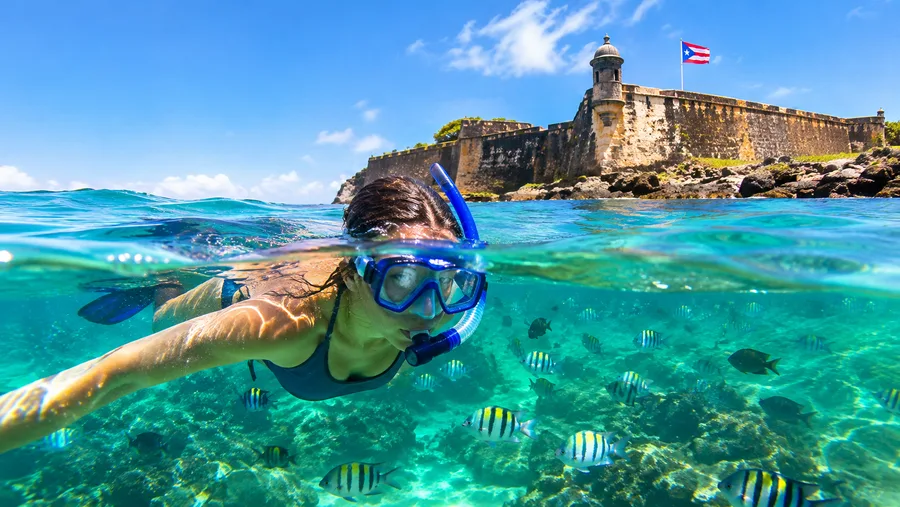
Teaching ethical San Juan marine habits starts before you zip your gear bag. Puerto Rico's reefs face pressure from coastal development, warming seas, and careless crowds who stand on living rock. Escambrón receives hundreds of visitors every Saturday, and the difference between a pristine reef and dead rubble comes down to foot placement.
Kids love to touch things. It is natural. But ocean life here is fragile, and some of it bites or stings back. Fire coral grows on the metal pilings near the old ruins at Escambrón, and brushing against it leaves a burning rash that ruins an afternoon instantly. Long-spined black sea urchins also wedge themselves into crevices throughout the rocks.
- Float, do not stand: Remind kids that brown or green rocks under the water are living coral colonies that die if stepped on with heavy rubber fins.
- Give sea turtles ten feet: Never chase, touch, or crowd green turtles when they surface to breathe, as this causes stress and drives them out of the bay.
- No fish feeding: Bread and crackers disrupt fish digestion and make sergeant majors aggressive toward swimmers.
- Mineral sunscreens only: Pick zinc oxide or titanium dioxide lotions to keep chemical bleaches away from the delicate polyps.
Honestly, watching wildlife without interfering is a great lesson for kids. We sat on the sand after swimming and watched a green turtle pop its head out of the water three times to breathe. It felt earned because we had given the animal space while snorkeling half an hour earlier. That quiet memory remains clearer to my niece than any souvenir we bought in town.
Frequently Asked Questions about family snorkeling in san juan puerto rico
What is the absolute safest snorkel spot in San Juan for young children?
The protected inner cove at Balneario del Escambrón is the safest ocean spot. Its natural limestone barrier blocks Atlantic waves, keeping the water shallow and calm for young children and nervous beginners.
Can we rent snorkel gear right on the beach in San Juan?
Yes. Vendors operate trailers at Escambrón Marine Park offering mask, snorkel, and fin rentals, usually running around $15 to $20 per set for two hours, along with flotation vests for kids.
Are there lifeguards on duty at San Juan snorkeling beaches?
Escambrón typically has lifeguards stationed at the main public beach section during normal daytime hours, but you should never rely on them as your primary safety measure. Always stay within arm's reach of your child.
Is Condado Lagoon cleaner than the ocean beaches?
Condado Lagoon has calmer, safer water for paddling and floating, but visibility is often lower than Escambrón because of silt. It is clean and safe to swim in, though it lacks the bright coral reef feel of open-water coves.
Quick Reference
- Safest kid beach: Escambrón inner cove
- Best time for calm water: 8:00 AM to 10:30 AM
- Parking fee at Escambrón: roughly $5 cash
- Key animal sightings: Green turtles, sergeant majors, manatees
Book your snorkeling in puerto rico experience:
Before You Dive In
Do not overcomplicate your family outing. Grab your masks, pack two jugs of fresh tap water to rinse stinging salt out of little eyes, and head straight to Escambrón around breakfast time. San Juan snorkeling can be effortless and memorable if you respect the power of the Atlantic and pick your spots wisely. Give your kids the space to float at their own pace, keep your hands to yourself around the turtles, and enjoy one of the easiest ocean adventures in the Caribbean.
Read more about snorkeling in puerto rico.