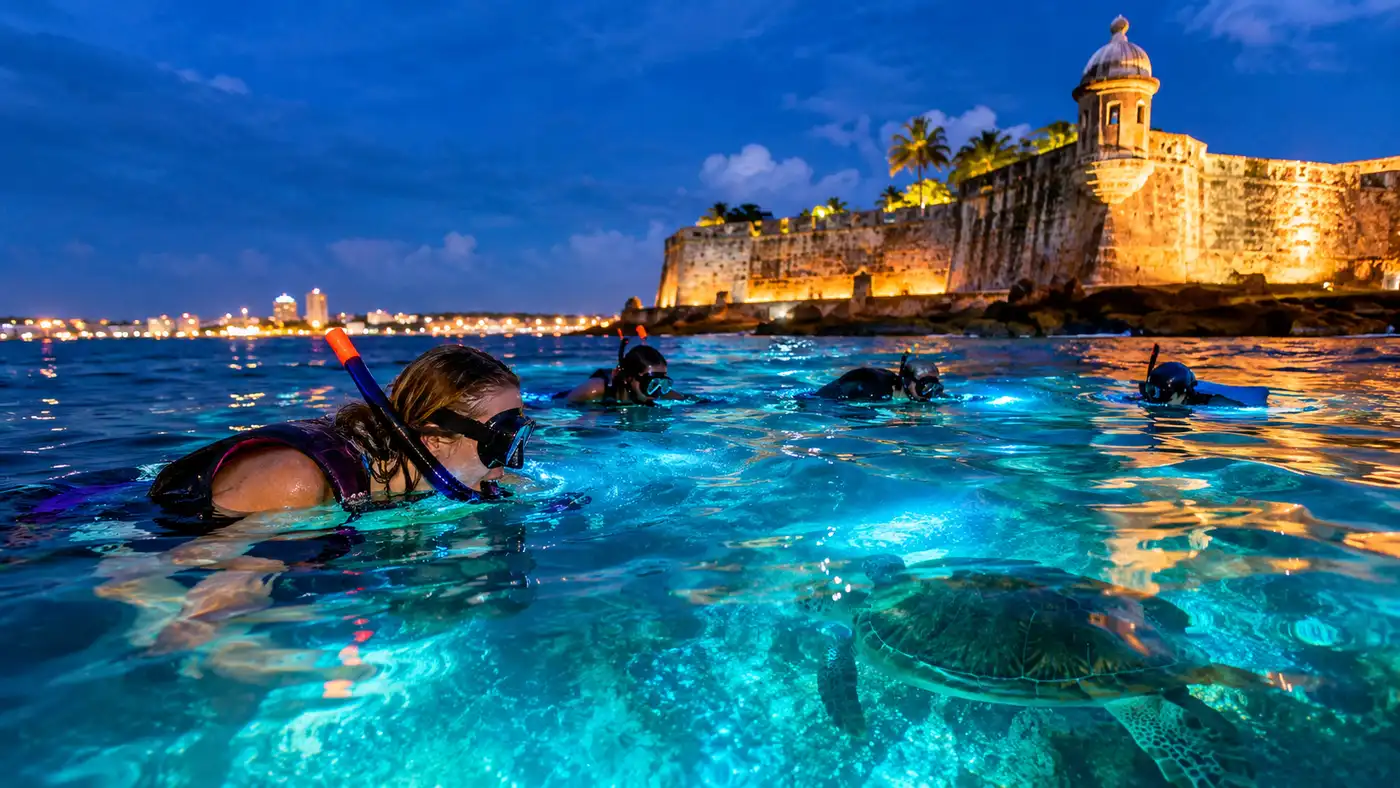
Night Snorkeling in San Juan a Glowing Experience
Wading into dark water off a city beach around 8:30 in the evening feels completely irrational. The surf looks like black ink, the streetlights from the nearby avenue cast a dirty amber glow across the shallows, and your brain screams that daylight is meant for swimming. Yet slipping your mask on and dipping your face below the surface changes everything. Booking a guided trip for night snorkeling puerto rico opens up an eerie, technicolor world right off the capital's coast that daytime swimmers paddle straight over without ever noticing.
Most visitors stick to afternoon excursions when the Caribbean sun lights up the coral formations. That is fine, sure, but daytime reefs often sleep while night reefs wake up. Predators come out of deep crevices to hunt, resting sea turtles tuck their heads beneath limestone ledges, and tiny pockets of bioluminescent dinoflagellates spark neon blue when you cut your hand through the water. If you want to snorkel in San Juan with a completely different perspective, stepping off the sand after sunset is easily one of the strangest, coolest things you can do on the island.
Book your snorkeling in puerto rico experience:
Why Night Snorkeling Puerto Rico Shakes Up the Standard Beach Vacation
The reef after dark operates on a flipped clock. During high noon, parrotfish and wrasses swarm the coral heads, pecking at algae while hiding from the blinding light. Once the sun dips behind the fortress walls of Old San Juan, those daytime regulars tuck themselves away to sleep. Parrotfish actually spin transparent mucus cocoons around their bodies to mask their scent from predators before dozing off against the rocks.
That is when the night shift takes over. Moray eels, timid and tucked into deep holes all day, slide out into open sand flats like rippling ribbons. Caribbean spiny lobsters crawl out across the sea floor instead of hiding beneath overhangs. You will watch hunting octopuses change texture from smooth alabaster to mottled brown in two seconds flat as your dive light tracks across them.
Honestly, the sheer intimacy of night snorkeling is what catches people off guard. In the daytime, your field of view is wide open, which can scatter your focus. At night, your entire universe shrinks to the 6-foot beam of your dive light. You stop scanning the horizon for turtles and start watching tiny, translucent cleaner shrimp pick parasites off resting surgeonfish. Everything feels slower, quieter, and intensely focused.
Note: Never touch resting sea turtles or grab sleeping reef fish under the lights, as artificial beams can disorient them and cause them to collide with sharp urchins.
The Best Spot to Snorkel in San Juan After Dark
You cannot simply throw on a snorkel and stroll into any random stretch of surf along San Juan's northern coastline. Condado Beach and Ocean Park have heavy shorebreaks and vicious rip currents that can kill an unsuspecting swimmer even during daylight hours. Night time snorkeling demands sheltered bays with minimal surge.
Balneario del Escambrón is the undisputed champion here. Tucked between the historic Condado district and Old San Juan, this protected marine park has natural rock barriers that break Atlantic swells, creating calm conditions even when the open ocean looks choppy. You can read up on the topography in our breakdown of Escambron Marine Park San Juans Best Snorkel Spot to understand why the horseshoe cove works so well. Entering from the sand is easy, there are no boat wakes to dodge inside the swimming zone, and the reef sits roughly 30 yards out from the shoreline.
Water depths here range from 4 to maybe 15 feet around the outer limestone fingers. That shallow depth is ideal for a night snorkel. If you dive down just five feet on a single breath, your flashlight illuminates tiny arrow crabs tucked into coral crevices and basket stars unfolding their fractal arms to catch microscopic plankton drifting on the current.
Condado Lagoon is another spot people sometimes ask about. The water there is flat calm, but the lagoon bottom is mostly silt and seagrass. While it can produce manatee sightings by day, visibility after dark tends to drop down to three or four feet if anyone kicks the bottom with a fin. Escambrón remains far crisper for snorkeling at night because the substrate is heavy sand and living rock rather than mud.
| Feature | Day Snorkeling (Escambrón) | Night Snorkeling (Escambrón) |
|---|---|---|
| Visibility Range | 25 to 40 feet | 10 to 15 feet (flashlight beam limit) |
| Key Active Wildlife | Green turtles, damselfish, tangs | Octopuses, moray eels, hunting rays, lobsters |
| Water Temperature | 81°F to 84°F | 78°F to 81°F |
| Average Group Size | 8 to 12 people | 4 to 6 people |
| Typical Cost | $45 to $55 | $65 to $85 |
What Marine Life Appears Once the Sun Sets?
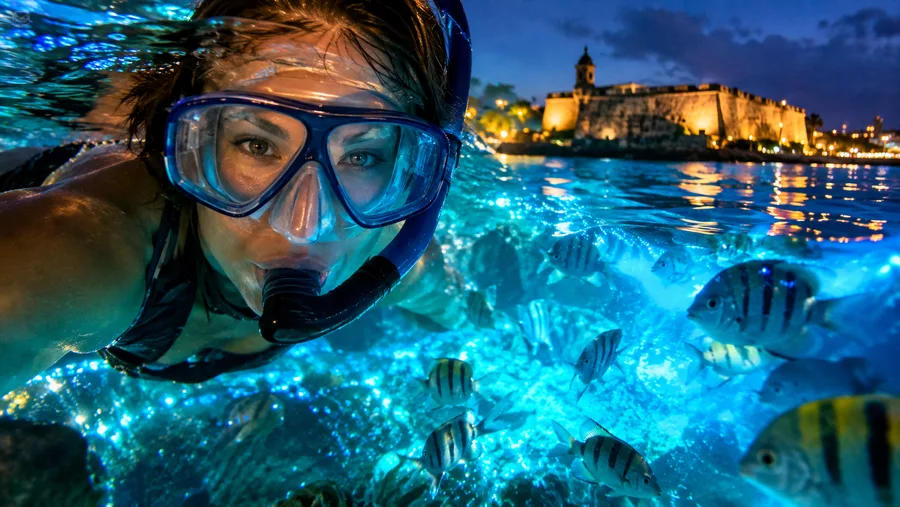
Night snorkeling puerto rico delivers wildlife encounters that daytime tours simply cannot match. If you have spent hours paddling around tropical waters seeing the same yellowtail snappers, the dark changes the cast completely.
Octopuses are the undisputed stars of dark reef tours. In Escambrón, the common Caribbean octopus spends daylight hours wedged into tight limestone pockets, visible only as a slit pupil and a single curled tentacle. By 9:00 PM, they are roaming over coral boulders, flashing iridescent turquoise rings or turning dark maroon to blend against sea plumes. Watching one stalk an unsuspecting hermit crab under your light beam feels like watching nature documentary footage play out two feet from your mask.
You also run into critters that look like alien hardware. Keep an eye out for these specific nighttime reef regulars:
- Spanish dancers and sea slugs: nudibranchs that tuck away from predatory fish by day emerge onto flat rock ledges to graze on sponges.
- Banded coral shrimp: recognizable by long, fragile white antennae reaching out from coral gaps to signal their cleaning station services.
- Spotted moray eels: actively swimming along the sand channels instead of coiling inside caverns, hunting for sleeping blennies.
- Bioluminescent dinoflagellates: small micro-organisms that sparkle blue or greenish-white when you wave your hand quickly through unlit water.
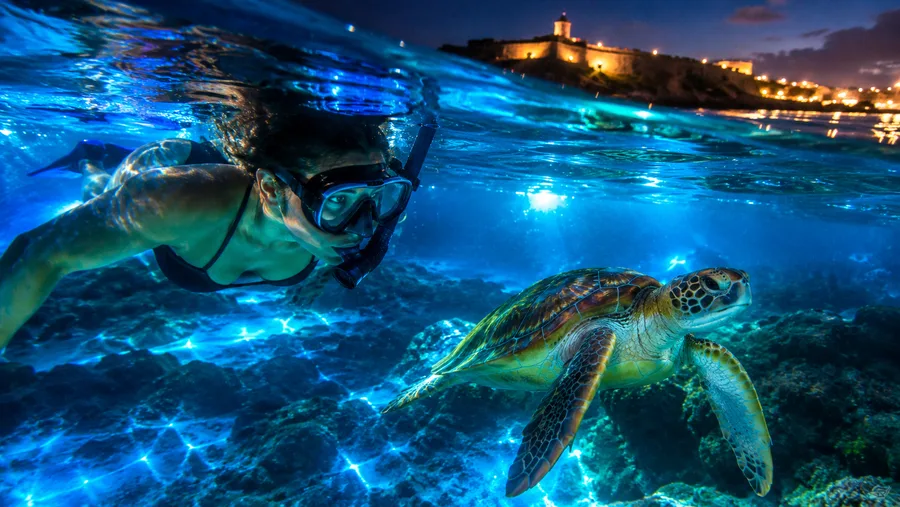
- Sleeping sea turtles: green and hawksbill turtles wedge their shells under rock shelves so currents do not float them away while resting.
The bioluminescence in Escambrón is subtle compared to famous glow bays like Mosquito Bay in Vieques, but it still thrills. When your guide signals everyone to point their dive lights directly into their chests or shut them off completely for 30 seconds, swirl your hand in circles. Tiny sparks flash around your fingers like underwater fireflies. It is surreal to float in total pitch black while generating your own personal galaxy in Caribbean seawater.
Pro tip: Switch your dive light to low beam or filter it with your fingers when looking at octopuses; high-powered LED beams can spook them into shooting an ink cloud and darting away.
Book your snorkeling in puerto rico experience:
Gear and Safety: What Night Time Snorkeling Demands
You should never jump into the ocean at night alone. Even seasoned free divers with hundreds of logged hours stick to buddy pairs or book licensed local guides for night excursions off San Juan. Darkness disorients your senses faster than you might expect. A gentle surge can drift you 40 yards west before you realize you have floated away from the entry point.
When you book an organized night excursion, good outfitters provide specific equipment built for low-light water safety:
- Waterproof underwater torches: heavy-duty LED lights rated to at least 300 lumens with secure wrist lanyards so you do not drop them in deep crevices.
- Chemical glow sticks or tank markers: clipped directly onto your snorkel barrel so guides and buddies can track your head above the water.
- Full neoprene wetsuits or rashguards: evening water feels noticeably cooler without the sun warming your back, and neoprene guards against stray thimble jellyfish or stinging hydroids.
- Comfortable open-heel fins: essential for steady, controlled kicking that prevents silt blowouts on the bottom.
I think the most common beginner mistake is panic kicking. People get nervous about what might be hovering beyond the edge of their light beam. They pedal their legs like bicycle riders, churn up sand, slice visibility down to zero, and exhaust themselves within ten minutes. Night swimming requires long, lazy kicks from your hips. Keep your flashlight held steady in front of you instead of swinging it around like a searchlight. Sweeping the beam too fast just gives you motion sickness.
If you need extra basics or want to understand what standard daylight equipment costs, check our guide on snorkel gear rental in San Juan where to rent costs before heading out to the beaches.
What to Expect on a Guided Night Snorkel Tour
Tours kick off around twilight, usually gathering on the sand at Escambrón around 7:15 or 7:30 PM. The guide runs a detailed 20-minute briefing on the beach while dusk fades to dark. You will go over hand signals, which are slightly different at night. In daylight, you make the OK sign with your fingers. In the dark, you circle your light beam on the sand to indicate everything is fine, or wave the beam rapidly back and forth across the bottom to signal for assistance.
Walking into the surf in fin-boots feels clumsy. Once the water hits chest level, you slip your fins on, pull your mask over your face, switch on your torch, and float forward. The transition is sudden. One moment you are listening to reggaeton playing from car stereos parked along the beach street, and the next you hear nothing except your own slow breathing through the snorkel tube.
The tour lasts roughly 60 to 75 minutes in the water. That sounds brief on paper, but after an hour of focused night observation, your eyes get tired and your core temp drops a couple of degrees. You will finish by wading back onto the warm sand, stripping off your wet gear, and feeling a strange adrenaline buzz while staring back out at the quiet, black ocean.
Frequently Asked Questions about night snorkeling puerto rico
Is night snorkeling in San Juan safe for non-swimmers?
No, you need basic swimming ability and comfort in the water. While guides provide flotation belts, snorkeling in the dark requires enough calm confidence that you will not panic if your mask leaks or you drift away from the group.
Are sharks a concern during night snorkeling trips?
Nurse sharks do hunt on the reefs around Escambrón after dark, but they are bottom-dwellers with tiny teeth that feed on crustaceans and sea urchins. They ignore snorkelers completely unless provoked. Large predatory sharks do not frequent these shallow, protected lagoons.
How cold is the ocean water around San Juan at night?
The water hovers between 78°F and 81°F throughout the year. It feels comfortable initially, but after 45 minutes of floating without sunlight on your skin, you might catch a chill. A 2mm shorty wetsuit or heavy rash guard makes a noticeable difference.
Can I bring my own action camera for night snorkeling?
Yes, but standard cameras cannot capture anything without an external dive video light. The tiny flash on a smartphone or standard camera will only illuminate suspended particles of sand right in front of the lens.
Quick Reference
- Location: Balneario del Escambrón (San Juan)
- Average Tour Cost: $70 to $85 per person
- Water Time: 60 to 75 minutes
- Best Season: May through September for flattest surf
- Required Gear: 300+ lumen torch, marker light, snorkel setup
Book your snorkeling in puerto rico experience:
The Bottom Line
Tucking yourself into bed early in San Juan means missing half the island's coastal ecosystem. Daylight reveals Puerto Rico's lush mountain peaks and turquoise surf, but dark reefs hold a completely different kind of magic. Once you see an octopus dance across sea coral or watch bioluminescent sparks light up your fingertips against the dark Atlantic, you will never look at quiet Caribbean waters the same way again. Grab a guide, strap on a flashlight, and dive in.
Read more about snorkeling in puerto rico.